27 Nov
Carbon Monoxide on the Water: A Quick Refresher Every Boater Should Revisit
At LOKKET, we spend a lot of time around marinas, boaters, and waterfront communities. And whether you’re a lifelong captain or a weekend cruiser, there’s one boat safety topic that’s worth bringing back into the spotlight every now and then:
Carbon monoxide (CO).
The danger you can’t see, smell, or taste — but absolutely can prevent.
This isn’t new information for most boaters. But sometimes the reminders that matter most are the basics. And with more people on the water as weather warms up, it’s the perfect moment to bring CO safety back to the front of everyone’s mind.
Why Carbon Monoxide Is So Dangerous on Boats
Carbon monoxide is a deadly gas produced by any carbon-based fuel: gasoline, propane, charcoal, oil burns, generators, and most types of onboard engines and heaters.
Because CO is:
- Colorless
- Odorless
- Tasteless
- Able to spread quickly in confined or low-ventilation areas
…it can build up without anyone noticing.
And the early symptoms — headache, nausea, weakness, dizziness — can feel just like seasickness, heat, or a drink too many. That’s why awareness is so
important.
Learn more about the symptoms of carbon monoxide here.
Where CO Risks Are Highest on a Boat
You already know the golden rule: moving air is safe air.
But here are the three high-risk zones that boaters sometimes forget about, straight from years of safety data:
1. The swim platform or water right behind the boat
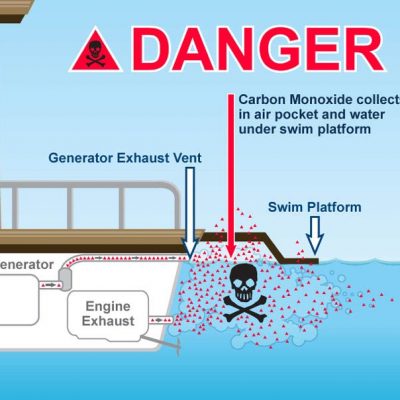
Even at idle, exhaust can create a concentrated cloud that sits just above the water.
This makes activities like:
- Teak surfing
- Body surfing
- Platform dragging
- Wake surfing within 20 feet of the transom
especially dangerous — and in many states, illegal — specifically because of carbon monoxide.
2. Enclosed cabins and cockpits
Running engines or generators while people are inside can allow CO to spread quickly through vents, windows, and deck openings.

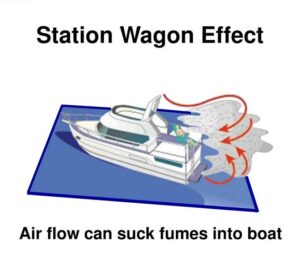
3. The “station wagon effect”
This happens when air currents pull exhaust back onto the boat — especially on calm days or when moving slowly. Even well-maintained engines can create dangerous levels of CO under the wrong airflow conditions.
Simple Steps That Prevent Tragedies
Every CO-related boating fatality is preventable. Here’s what keeps everyone safer:
- Keep fresh air flowing through the boat
Ventilation is the #1 defense. - Install a marine-rated carbon monoxide detector
Especially in cabins where people sleep or shelter. - Never swim near or behind an operating boat
Even at idle, exhaust can build up dangerously fast. - Avoid the transom area when engines or generators are running
On calm days, give it even more buffer. - Never operate the boat with someone sitting or suspended directly behind the transom
This is where fatalities happen quickest. - Maintain your engines and exhaust systems
Leaks are a leading cause of CO entering cabins. - Know the symptoms
Irritated eyes, headache, nausea, dizziness, confusion — and get fresh air immediately if anyone experiences them.
A Message From Us to the Boating Community
None of this is meant to scare you — it’s meant to protect you and the people you care about. We care about you.
Most boaters already know about carbon monoxide. But reminders save lives, and if this refresher helps even one person avoid a tragic accident, it’s worth it.
At Lokket, our mission is to help keep marinas and boaters safer and more connected. Carbon monoxide safety is a small but vital part of that.
Be safe, stay prepared, and enjoy every moment on the water.
— The LOKKET Team